
The 4-3-3: Attacking Powerhouse
A dynamic, fluid formation designed for high-pressing, quick transitions, and dominating the attack through wide forwards.
The 4-3-3 formation is synonymous with modern, attacking football. Popularized by Dutch teams in the 1970s and perfected by sides like Pep Guardiola's Barcelona, it focuses on creating triangles and passing options all over the pitch. Its defining feature is the front three: a central striker flanked by two wide forwards, or wingers.
This setup allows a team to press opponents high up the pitch, forcing turnovers in dangerous areas. The midfield trio is crucial for balance, typically consisting of a deep-lying defensive midfielder (the '6'), a box-to-box carrier (the '8'), and a creative playmaker.
Tactical Layout
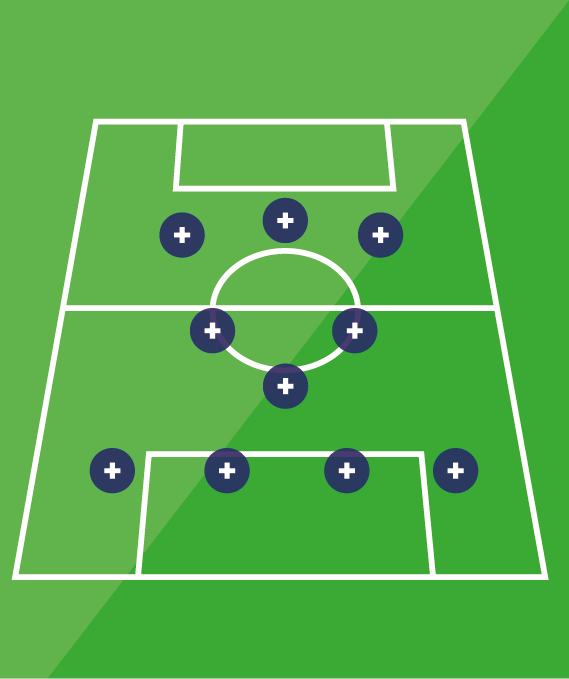
Key Roles
The Wide Forwards (Wingers)
The success of a 4-3-3 heavily relies on the quality of its wingers. These aren't just wide midfielders; they are potent attackers. The ideal players are fast, technically gifted dribblers who can cut inside to shoot or deliver precise crosses. They must have the stamina to contribute to the high press but, above all, they need the creative spark to break down defenses in one-on-one situations.
The Holding Midfielder (No. 6)
This player is the anchor of the team, shielding the defense and dictating the tempo from deep. They must be positionally disciplined, an excellent tackler, and a calm distributor of the ball. Without a strong holding midfielder, the 4-3-3 can be dangerously exposed to counter-attacks.
How to Effectively Use the 4-3-3
To master the 4-3-3, the roles within the midfield trio must be clearly defined. The full-backs are also essential; they must have the stamina to overlap the wingers in attack while being disciplined enough to recover their defensive positions. The chemistry of the front three is paramount, with players interchanging positions and making intelligent runs to pull defenders out of position.
How to Play Against the 4-3-3
A compact defensive shape is key to frustrating a 4-3-3. Formations like a 4-4-2 or a 3-5-2 can create a solid block and deny space for the attacking players. Specifically targeting the space left behind the adventurous full-backs on the counter-attack is one of the most effective strategies. Forcing the 4-3-3 team into wide areas and defending crosses well can nullify much of their central threat.
Used by:
Johan Cruyff's "Dream Team" at Barcelona (1990s), Pep Guardiola's Barcelona (2008-2012), Jürgen Klopp's Liverpool, and many modern possession-based teams like Manchester City.