
The 4-2-3-1: Tactical Flexibility
A balanced and popular formation that offers defensive security through a 'double pivot' and creative freedom for a number 10.
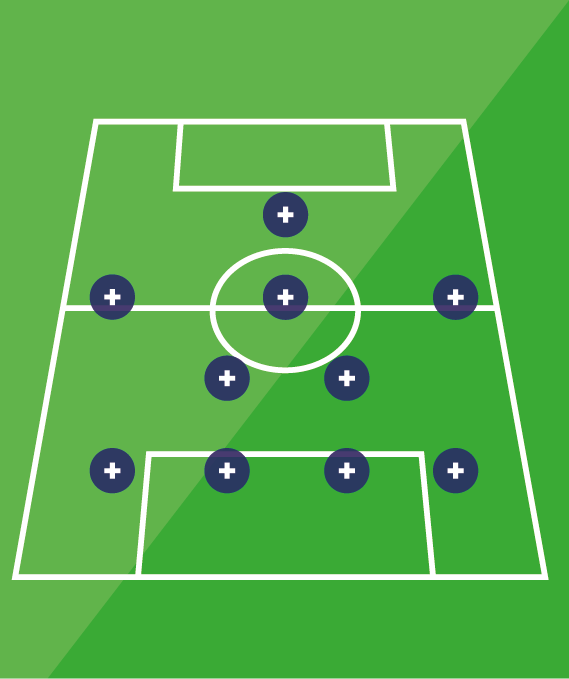
The 4-2-3-1 is one of the most common and balanced formations in modern football. Its structure is built upon a solid four-player defense, protected by two holding central midfielders known as the 'double pivot'.
Ahead of them, a line of three attacking midfielders—two wide and one central (the 'number 10')—supports a lone striker. This setup provides excellent defensive cover while allowing for fluid, creative, and varied attacks.
Tactical Layout
Key Roles
The Attacking Midfielder (No. 10)
The creative fulcrum of the team. The number 10 operates in the space between the opposition's midfield and defense, tasked with linking play and creating chances. This player needs exceptional spatial awareness, vision, passing, and dribbling skills. An ineffective number 10 can cause the entire attacking structure to fail.
The Double Pivot
This pair of holding midfielders provides the team's tactical balance. They screen the defense, control the tempo, and initiate attacks from deep. Their discipline is what allows the four attacking players ahead of them to play with freedom. At least one must be a strong tackler, while the other is typically a deep-lying playmaker.
How to Effectively Use the 4-2-3-1
The key to a successful 4-2-3-1 is the partnership in the double pivot. They must be disciplined, protecting the defense and dictating the tempo. The number 10 is the creative hub, linking the midfield to the attack, and must be able to find pockets of space. The lone striker needs to be strong enough to hold up the ball and intelligent enough to make runs for the attacking midfielders to find.
How to Play Against the 4-2-3-1
To counter a 4-2-3-1, you must disrupt its creative hub. Assigning a defensive midfielder to man-mark the number 10 can be very effective. Pressing the double pivot high up the pitch can force turnovers in dangerous areas and stop their build-up play at the source. A formation with two strikers, like a 4-4-2, can also occupy both centre-backs, creating space for midfielders to exploit.
Used by:
José Mourinho's treble-winning Inter Milan and Real Madrid sides, Jupp Heynckes' treble-winning Bayern Munich (2013), and the Spanish national team that won the 2010 World Cup.