
The 3-5-2: Dominating the Midfield
A tactically flexible formation that packs the midfield, utilises aggressive wing-backs, and maintains a dual striker threat.
The 3-5-2 is a formation designed to control the center of the pitch and provide width through aggressive, high-stamina wing-backs. It features three central defenders, a packed five-player midfield, and a traditional two-striker partnership.
Defensively, it can be incredibly solid, shifting to a 5-3-2 as the wing-backs drop deep. In attack, it allows a team to outnumber opponents in midfield, control possession, and provide varied service to the two forwards from both central and wide areas.
Tactical Layout
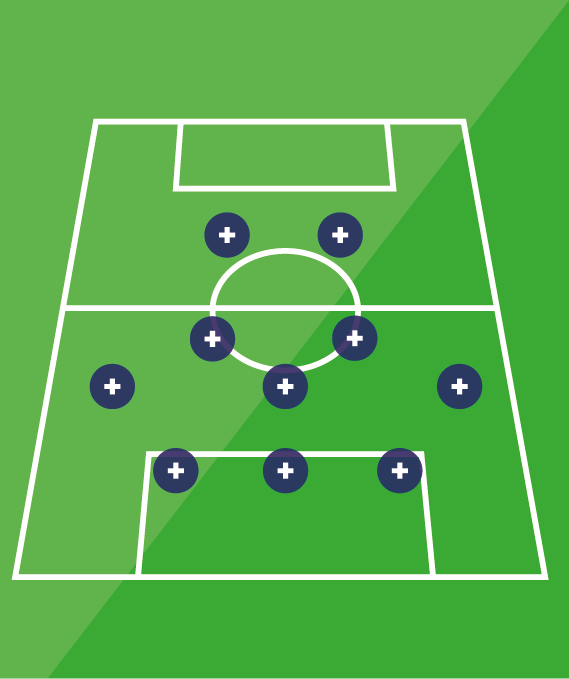
Key Roles
The Wing-Backs
The entire formation lives or dies by the quality of its wing-backs. This is arguably the most demanding position in modern football, requiring the attacking output of a winger and the defensive discipline of a full-back. They must have elite stamina to patrol the entire flank, providing width in attack and recovering to form a back five in defense.
The Central Centre-Back
Often the middle defender in the back three acts as the leader and organiser. This player needs to be dominant in the air and an intelligent reader of the game to sweep up danger. In modern systems, this player must also be comfortable on the ball, capable of stepping into midfield to break the opposition's press and start attacks from deep.
How to Effectively Use the 3-5-2
Success in a 3-5-2 is almost entirely dependent on the quality of the wing-backs; they must be excellent both defensively and offensively. The central midfield trio needs balance: a holding player, a box-to-box runner, and a creative force. At least one of the three centre-backs should be comfortable carrying the ball out of defense to start attacks.
How to Play Against the 3-5-2
The key is to exploit the space behind the advancing wing-backs. Using a formation with high and wide wingers, like a 4-3-3, can pin the wing-backs in their own half. A quick switch of play from one flank to the other can leave a wing-back isolated and create a 2-vs-1 overload. Pressing their centre-backs can also force errors, as they have fewer easy passing options than in a back four.
Used by:
Carlos Bilardo's 1986 World Cup-winning Argentina, many Italian Serie A teams, Antonio Conte's Juventus, Chelsea and Inter Milan sides, and Louis van Gaal's Netherlands at the 2014 World Cup.